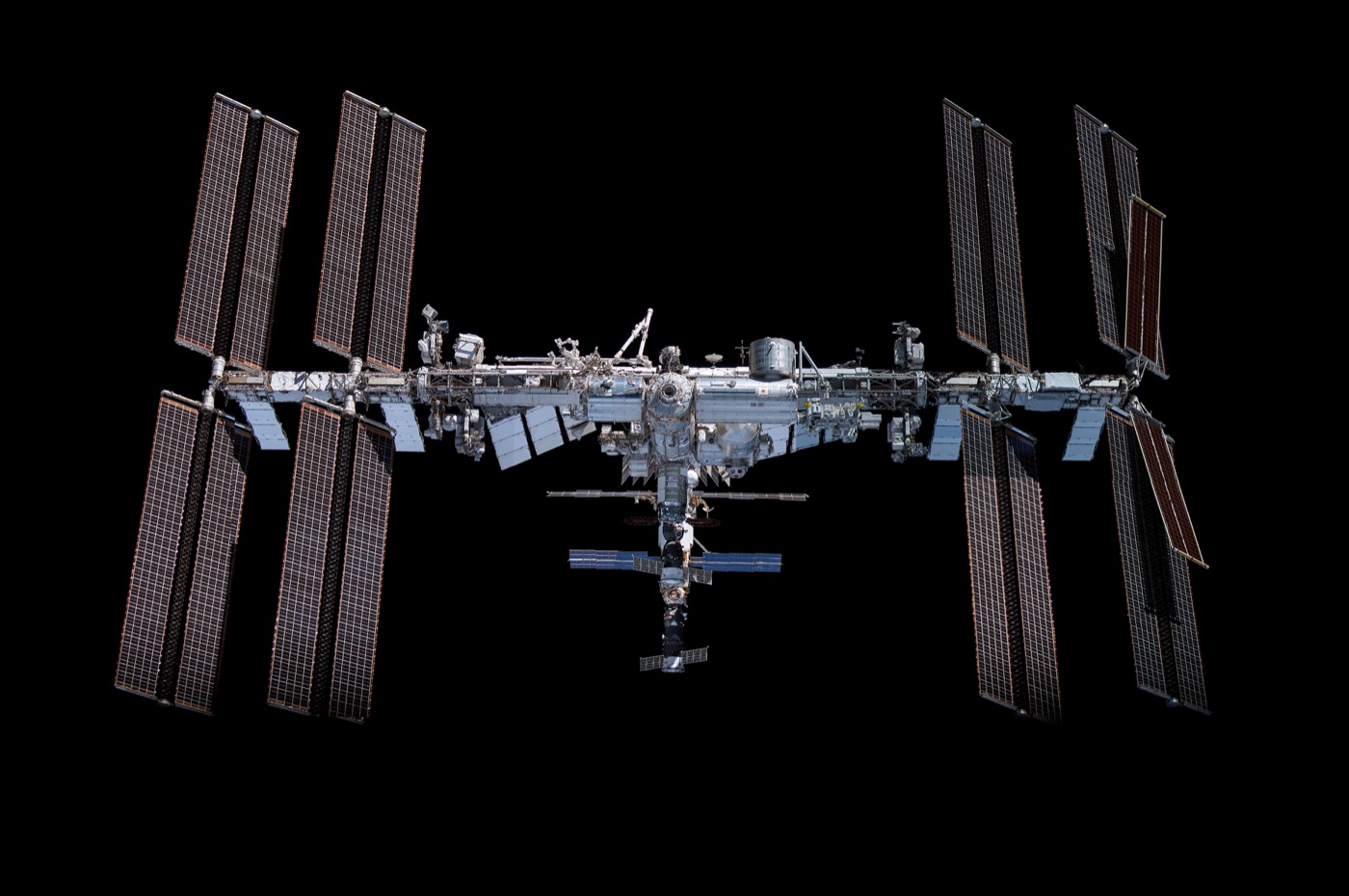
What does the ISS look like?
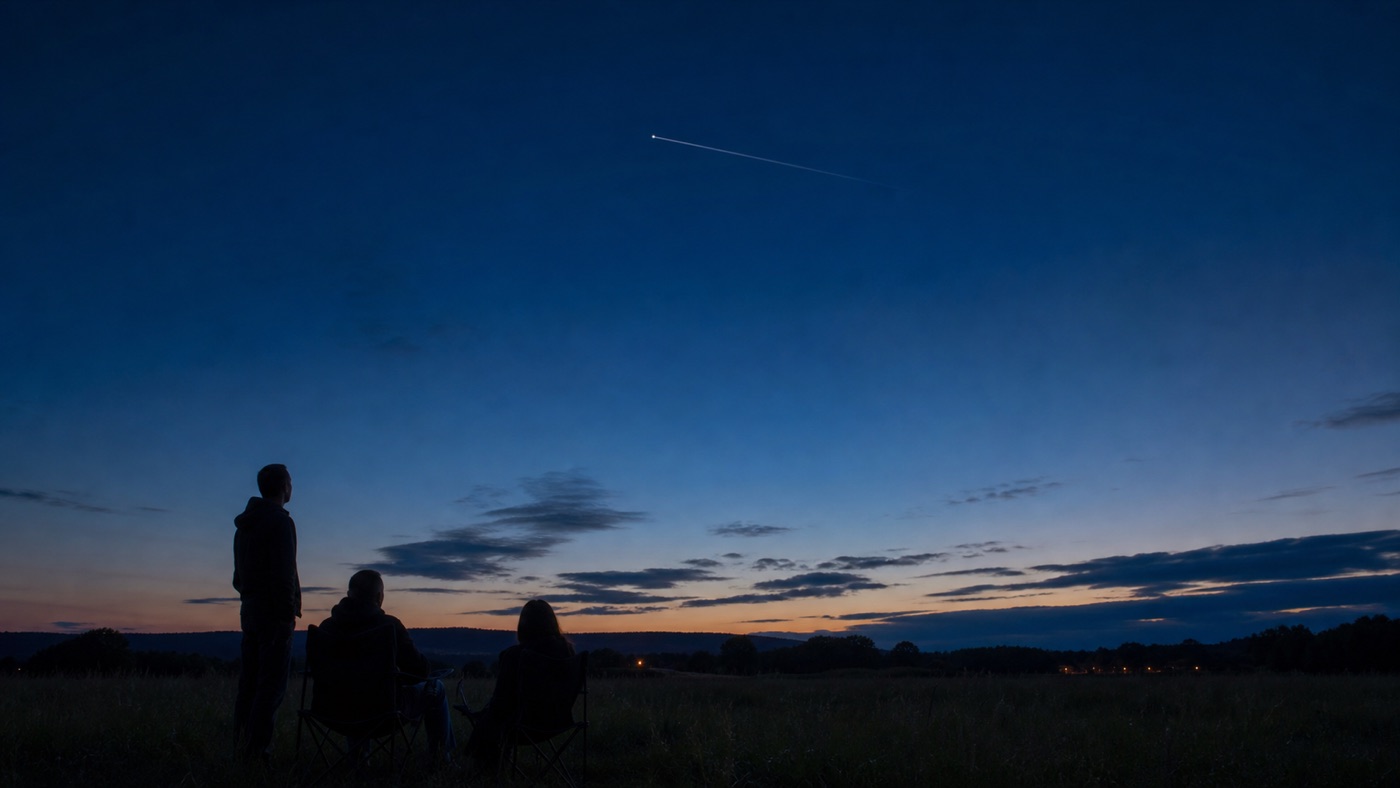
To the naked eye, the ISS looks like a bright, steady point of light. During a good pass it can become one of the brightest moving objects in the sky. Unlike airplanes, it does not show flashing navigation lights.
ISS visibility guide
Wondering when the ISS will be visible tonight? This guide explains how to check the next likely International Space Station viewing time from your location, what conditions matter, and how to recognize the ISS when it crosses your sky.
Quick answer
The ISS may be visible tonight from your location if it passes above your horizon while your sky is dark and the station is still lit by the Sun. Use the quick check below to calculate the next likely visible ISS pass and show that moment on the map.
Quick check
Enter coordinates, use your browser location, or type a city while the site is online. The map below stays on this page and marks your viewing location so you can start exploring ISS visibility without leaving this guide.
The ISS is usually visible only for a few minutes at a time. The best viewing windows happen near sunrise or sunset. At those times, the ground below you may already be dark, while the space station is still high enough above Earth to reflect sunlight.
That reflected sunlight is what makes the ISS appear as a bright white point moving steadily across the sky. It does not blink like an aircraft, and it usually moves faster than most planes appear to move from the ground.
Even though the ISS orbits Earth roughly every 90 minutes, it is not visible from every location on every pass. Several things need to line up:
The International Space Station circles Earth about once every 90 minutes. Its orbit is tilted by about 51.6 degrees, so the station's ground track moves across a wide band of Earth rather than over the same cities every time. That is why an ISS pass schedule changes quickly and why the best viewing time can be different from one location to another.
Higher-latitude locations can still see the ISS, but the station may not pass directly overhead there. A lower pass can be harder to notice because buildings, trees, hills, haze or city light can block the view near the horizon.
Celesiq shows the ISS together with the Sun, Moon, planets, satellites and space stations on a live world map. To check the ISS from your own location:
You can also use the time controls to move forward or backward and see how the ISS position changes over time.
To the naked eye, the ISS looks like a bright, steady point of light. During a good pass it can become one of the brightest moving objects in the sky. Unlike airplanes, it does not show flashing navigation lights.
The best time to look is usually within a few hours after sunset or before sunrise. Choose a spot with an open horizon, avoid bright streetlights, and check the sky a few minutes before the pass.
You do not need a telescope to see the space station. For most people, the best way to track the ISS without a telescope is to know the approximate pass time, face the right part of the sky, and look for steady motion rather than blinking lights.
A strong ISS pass usually starts low near one horizon, climbs across part of the sky, then fades as the station enters Earth's shadow or drops toward the opposite horizon. The quick check above helps you find moments when that geometry is most likely from your location.
The most useful things to remember are simple: look at the predicted time, start a few minutes early, and search for a bright point that moves smoothly without blinking.
ISS visibility is local. A pass that is easy to see from one city may be too low, too bright, or completely invisible from another. That is why "ISS visible from my location" is a better question than simply asking where the ISS is right now.
Your location affects the station's altitude above your horizon, whether the sky is dark, and whether the pass happens at a practical viewing time.
The quick check is designed for visual planning and education. It estimates whether the ISS is above your local horizon while the sky is dark enough and the station is sunlit. Real-world viewing can still change because of cloud cover, local obstructions, haze, brightness, updated orbital data and the exact shape of your horizon.
For a casual skywatching plan, the Celesiq map helps you understand the geometry. For official timing, mission context or safety-critical use, compare with official space agency information.
The ISS quick check combines local sky geometry with a simplified pass search. It is meant to answer the practical skywatching question: is there a likely visible ISS pass from this location soon?
It depends on your location, the time, local darkness, and whether the ISS passes above your horizon while it is still sunlit. Use Celesiq's viewing location and Visibility Check features to search for visible ISS moments from your area.
ISS visibility is most likely shortly after sunset or shortly before sunrise. The exact time changes from day to day because the station moves around Earth quickly and its ground track shifts over time.
The ISS is visible when sunlight reflects from the station while your local sky is dark enough. During the day, the sky is usually too bright. Late at night, the ISS may be inside Earth's shadow and no longer reflecting sunlight toward you.
During a good pass, the ISS can become very bright and easy to spot with the naked eye. Its brightness depends on the angle of sunlight, the station's height above your horizon, and atmospheric conditions.
No. The ISS usually appears as a steady white light. If you see blinking red, green, or white lights, you are probably looking at an aircraft rather than the space station.
Yes. You do not need a telescope or binoculars to see the ISS. The station is usually best enjoyed with the naked eye because it moves quickly across a wide part of the sky.
Use a location-based pass time, go outside a few minutes early, choose an open horizon, and look for a steady white light moving smoothly across the sky. Most visible ISS passes are best seen with the naked eye because the station moves across a large part of the sky.
The ISS may still be too low above your horizon, hidden by cloud, blocked by buildings or trees, inside Earth's shadow, or passing while your local sky is too bright.
A visible ISS pass usually lasts only a few minutes. The exact duration depends on how high the station passes above your horizon and how long it remains sunlit.
No. The ISS is not visible every night from every location. Visibility depends on the station's path, your local darkness, the Sun angle, weather conditions and your horizon.
Celesiq helps you connect the ISS position on Earth with what you can actually see from your location. Set your viewing location, select the ISS, and use the live sky map to explore when the station may be visible tonight.
Use the quick check above to calculate a likely visible ISS moment and show that moment on the map. The main Celesiq map remains available from the navigation whenever you want the full tracker, manual time controls and Visibility Check. You can also visit the articles overview for more astronomy guides as the site grows.