One lifetime. Eight different years.
How Old Would You Be on Other Planets?
Every birthday marks roughly another trip around the Sun aboard Earth. But each planet takes a different amount of time to complete its orbit: Mercury travels around the Sun in about 88 Earth days, while Neptune takes nearly 165 Earth years. Enter your birthday below to discover how many years you would have lived on each planet. Your lifetime stays the same; the length of the year changes.
Planetary age calculator
Your age on eight planets
All calculations stay in this browser. Your birth date is never saved or sent. Results are approximate.
Enter your birthday to compare the same elapsed time across eight planets.
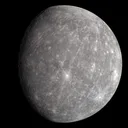
Mercury
One year = 87.9691 Earth days

Venus
One year = 224.701 Earth days
Earth
One year = 365.25636 Earth days
Sidereal years, not calendar age

Mars
One year = 686.98 Earth days

Jupiter
One year = 4,332.589 Earth days

Saturn
One year = 10,759.22 Earth days

Uranus
One year = 30,688.5 Earth days
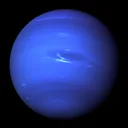
Neptune
One year = 60,182 Earth days
Bonus: Your Age on Pluto

Pluto · dwarf planet
One year = 90,560 Earth days · approximately 248 Earth years
Share your planetary age
Only the ages on Mars and Jupiter and a clean page link are shared. Your birth date is never included.
How Many Times Have You Orbited the Sun?
The count shows complete modeled orbits since your assumed birth instant. Each ring shows the fraction of the next orbit only: empty means just starting; a full ring means one more orbit is about to be completed. Counts are not capped, even for Mercury.
Mercury
—Choose a birth date to see your progress.Venus
—Choose a birth date to see your progress.Earth
—Choose a birth date to see your progress.Mars
—Choose a birth date to see your progress.Jupiter
—Choose a birth date to see your progress.Saturn
—Choose a birth date to see your progress.Uranus
—Choose a birth date to see your progress.Neptune
—Choose a birth date to see your progress.Pluto · dwarf planet bonus
—Choose a birth date to see your progress.Date-only birthdays are interpreted as 00:00 UTC. Results compare that instant with the current UTC moment. The Earth card counts sidereal orbital years; the separate calendar reference counts completed birthdays. The eight planet cards and the Pluto bonus update together.
How Does Age Work on Other Planets?
A birthday marks another year, but a year is a unit with a planetary origin: it is the time needed to travel around the Sun. Mercury completes that journey much sooner than Earth. Neptune needs far longer. The same stretch of someone’s life therefore contains different numbers of these orbital periods.
Imagine measuring one road in meters and then in kilometers. The road does not change; the number changes because the measuring unit changes. Planetary age works in a similar way. Your elapsed lifetime stays fixed while the length of the year used to describe it varies.
You do not need to travel to another world to make this comparison. The results ask how many of each planet’s reference years fit into your lifetime. They are equivalent orbit counts, not a record of your actual journeys or a reconstruction of the planets’ historical positions. Explore the interactive solar system map to see the orbital geometry behind the numbers.
How to Calculate Your Age on Other Planets
First find the elapsed time between a birth date and the comparison moment. Express that duration in Earth days, then divide by the chosen planet’s orbital period in Earth days. Keep the units consistent and round only the final result.
Example: 30 Julian Earth years = 30 × 365.25 = 10,957.5 days
Mars: 10,957.5 ÷ 686.980 ≈ 15.95 Mars years
Jupiter: 10,957.5 ÷ 4,332.589 ≈ 2.53 Jupiter years
This hypothetical person is exactly 30 Julian Earth years old, where a Julian year is defined as 365.25 days. That is a deliberately fixed duration, not a claim that every real person celebrating a thirtieth birthday has lived exactly 10,957.5 days. Actual birthday intervals include a calendar-dependent number of leap days.
The calculator uses your entered date instead of that example. It interprets a date without a birth time as midnight at the start of that date in UTC, and compares it with the current UTC instant. Each modeled day is 86,400 seconds. Your actual birth time, leap seconds and variations in orbital motion are not included.
How Long Is a Year on Each Planet?
These are the fixed, approximate sidereal periods used throughout this page. A sidereal orbit is measured relative to distant stars. The last column converts those periods into Julian years of 365.25 days; it is a convenient comparison unit rather than a count of Earth calendar birthdays.
| Planet | Earth days per orbit | Julian Earth years |
|---|---|---|
| Mercury | 87.9691 | 0.241 |
| Venus | 224.701 | 0.615 |
| Earth | 365.25636 | 1 |
| Mars | 686.98 | 1.881 |
| Jupiter | 4,332.589 | 11.862 |
| Saturn | 10,759.22 | 29.457 |
| Uranus | 30,688.5 | 84.021 |
| Neptune | 60,182 | 164.769 |
Earth’s 365.25636-day sidereal reference is slightly longer than a tropical year, the seasonal cycle of roughly 365.242 days. Our calendar approximates the seasonal cycle using ordinary and leap years. That is why the Earth card can differ slightly from the separate calendar-age reference.
Why Would You Be Older on Mercury?
Mercury has the shortest orbital period of the eight planets: about 88 Earth days. More short years fit into your lifetime, so its age number is the largest. For the fixed 30-Julian-year example, the calculator gives approximately 124.56 Mercury years.
Mercury travels on a smaller orbit closer to the Sun and also moves faster along that orbit than Earth. Both contribute to its short year. “Older” here describes only a higher numerical count. It does not mean that your body has experienced more elapsed time.
Why Would You Be Younger on Neptune?
Neptune’s reference period is 60,182 Earth days, approximately 164.77 Julian years. A lifetime that includes many Earth birthdays can therefore include less than one Neptune year. The 30-Julian-year example is about 0.182 Neptune years: zero completed orbits, followed by roughly 18.21% of the next orbit.
The orbit display separates those ideas. Its whole-number label counts completed modeled years, while its ring shows only progress through the following year. Every ring uses a zero-to-one-orbit scale. Equal ring sizes do not mean equal lifetimes, equal distances or equal numbers of completed orbits.
Do You Actually Age Differently on Other Planets?
For a comparison that changes motion rather than the unit used to count time, try the planetary jump height calculator. It keeps takeoff speed fixed and shows how reference gravity changes a jump’s height and duration.
Changing the unit used to report age does not change biological aging. One day of elapsed time is not transformed into several days of bodily aging merely because Mercury has a short year. A different number appears because a different orbital period is being used as the denominator.
Relativity is a separate subject: clocks can accumulate different proper times along different paths through spacetime. This educational calculator does not model those effects, travel, environmental conditions or health. Its results are comparisons of orbital units, not predictions of how someone would age while living on another planet.
Gravity offers another useful comparison, with a different cause. Our weight on each planet calculator explains how gravitational force can change while your mass stays the same.
What Is the Difference Between a Day and a Year on a Planet?
A year concerns a planet’s orbit around the Sun. Rotation concerns the planet spinning around its own axis. A sidereal rotation period measures a turn relative to distant stars; a solar day measures the interval between successive passages of the Sun across the same local meridian.
Those two day lengths differ because the planet moves along its orbit while rotating. Venus is a striking example: it spins retrograde, taking about 243 Earth days per sidereal rotation, while its solar day is about 117 Earth days and its year about 225 Earth days. Saying simply that its “day is longer than its year” hides which definition of day is intended.
This calculator uses orbital years only. It does not count sunrises or rotations. For other consequences of solar-system scale, compare sunlight travel times to each planet and the Sun’s apparent size from different planets.
Frequently Asked Questions
How old would I be on Mars?
Divide your elapsed lifetime in Earth days by 686.980. A fixed span of 30 Julian Earth years is about 15.95 Mars years. Enter your birthday above to use your own elapsed time rather than this hypothetical example.
How old would I be on Jupiter?
Divide elapsed Earth days by 4,332.589. Jupiter’s long year makes the result smaller than the Earth-year count. Thirty Julian Earth years correspond to about 2.53 Jupiter years.
Which planet would make me the oldest?
Mercury gives the highest numerical age among the eight planets because its year is shortest. The ordering is determined by orbital periods, not by the person’s birth date, except that all results are zero at the exact assumed birth instant.
Which planet would make me the youngest?
Neptune gives the lowest numerical age because it has the longest year among the eight planets. Small decimal values still represent real elapsed time; a result below one means the first full modeled orbit is not yet complete.
Can you have a birthday on Neptune?
You can define an orbital anniversary after one Neptune period has elapsed. In this model the first arrives after about 164.77 Julian Earth years. It is a mathematical milestone, not a claim that an ordinary calendar date corresponds to a Neptunian calendar or habitable surface.
Is Pluto included in the calculator?
Yes, as a separate dwarf-planet bonus. Its 90,560-day reference year gives a lower numerical age than Neptune’s. The eight planets remain grouped together, and Pluto also has its own completed-orbit count and progress ring.
How are leap-day birthdays and time zones handled?
All calculations use UTC. For the calendar reference, February 29 birthdays advance on March 1 in non-leap years. The orbital ages always use elapsed time directly, so this calendar convention does not alter their values.
How Old Would You Be on Pluto?
The separate Pluto bonus uses an approximate orbital period of 90,560 Earth days, as listed in the NASA Pluto fact sheet. Divide your elapsed Earth days by that period. Pluto is a dwarf planet, so its result is kept outside the main eight-planet comparison.
Sources and Calculation Notes
We checked the approximate periods and the sidereal-versus-tropical distinction against NASA NSSDCA’s detailed fact sheets for Mercury, Venus, Mars, Jupiter, Saturn, Uranus and Neptune. The fixed calculator dataset shown above is not an exact reproduction of those current tables: their outer-planet periods differ slightly. These reference choices produce small differences between educational calculators.
JPL’s astrodynamic parameters provide the 365.25-day Julian year, 86,400-second day and 365.25636-day sidereal Earth year. NASA’s fact-sheet notes explain period definitions and reference epochs. The IAU planet-definition resolution supplies the Pluto classification. This is a fixed-period educational model, not a precision ephemeris.